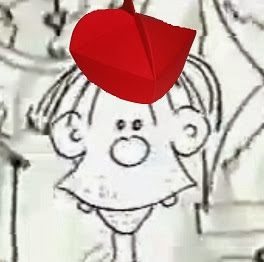
Marco Tosatti has written an interesting piece for
Vatican Insider, giving the names of
those people to whom Pope Francis talks and listens. However, the article is
implausible from beginning to end - nobody
with any sense ever listened to Piero Marini - and we are happy to
provide a corrected list.

Tony Flannery.
Tony Flannery has long known that he was right all along, and the rest
of the Catholic church in grievous error. The author of many books, such as
Why I excommunicated Pope Benedict, Enda Kenny - man or God? and
Come back to Me: my invitation to the Catholic Church.
As a Redemptorist, Flannery is subject to the three vows of
poverty, chastity and obedience (no, really). By bringing him back into the inner circle,
can Pope Francis be signalling a change of direction?

Damian Thompson of the Telegraph.
One of the first questions a pope asks himself is, "Where can I get good custard?" and fortunately Pope Francis can now draw on the expertise of the
Telegraph's custard-crazed ferret. Since Damian is also able to advise on
cupcakes, Bach, addiction, and the best way to stop Cardinal
Murphy-O'Connor hanging around making a nuisance of himself, he is rapidly
becoming indispensable.

The Spirit of Vatican II.
Pope Francis does of course have a hotline to Heaven, but his first
point of contact is Loftus, the Spirit of Vatican II. This angelic being
explains to him all the things that were not actually written down in the
Vatican II documents, or even agreed, but which were "in the spirit".
Pinocchio Masses, replacing Gregorian chant by Estelle White's Moses I Know You're The Man and liturgical dancing - all these were what almost-Saint Pope John XXIII
had in mind as urgent priorities when he called the Council.

Boris Johnson.
The Pope has a number of secular advisers, whose job it is to help him with
public relations, to avoid gaffes, and to speak his words carefully, bearing in
mind that they will be repeated and interpreted by people of all shades of
opinion. These advisers include Boris Johnson, Prince Philip and Gordon Brown.
As a result, we are unlikely to see the Pope stuck on a zipwire, asking
Archbishop Philip Tartaglia
"How do you keep the natives off the booze long enough to go to Mass?" or
referring to bigoted women.
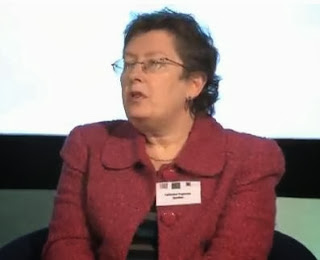
Catherine Pepinster.
Marginalised under Pope Benedict XVI, Catherine Pepinster of the Tablet
now plays a valuable role in telling Pope Francis what he actually said.
An off-the-cuff remark that perhaps now is not the time for the Church to
begin burning homosexuals becomes, after a little interpretation, a firm pledge
that the pope will soon be welcoming "gay" bishops and their partners. Similarly,
the Pope's comment that he was kept awake by a crying baby when he
slept in his humble apartment at the Hotel Casa Santa Marta (5 stars)
becomes a promise that the Catholic Church will soon change its mind
on
abortion.

Owen Jones.
Owen Jones of the Working Classes (seen above with a bottle of working-class
champagne) is there to help the Pope avoid the extravagance and pomp of his
predecessors. With his deprived background (Oxford University and the
Independent), Jones is
the ideal person to help Pope Francis with his "humility" campaign. "The
party's over," he says, "or at least we're running low on champagne!"
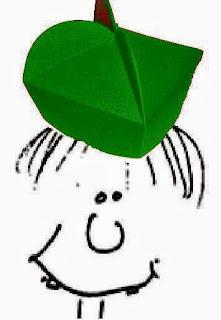
Eccles.
Eccles, seen here with a liturgically-correct (he claims) green biretta, is the
ideal person to consult if one wants to be saved. Pope Francis was already
a regular reader of his blog, and met him in Rome at the time of the
last conclave, disguised as a cardinal. Eccles's instructions are clear:
Tell me what saved popes do, and he is already formulating an action plan.