This is me, Eccles

This is me, Eccles
This is me, Eccles
Showing posts with label covenant. Show all posts

Sunday, 23 June 2013

2 Samuel

Time for more spiritual nourishment in the form of the next instalment of the Eccles Bible project, where we explain the Bible to atheists.

Now here we come to one powerful argument for atheism: the 2nd book of Samuel is not by Samuel, and doesn't even mention him. In the eyes of Richard Dawkins this proves that the Bible is false. But then The Selfish Gene doesn't mention Gene Kelly, so maybe it's not such a clincher after all.

Prophet Gene

The Prophet Gene, singing in the rain.

In fact the 2nd book of Samuel starts with David singing, or at least reciting, a lament over the deaths of Saul and Jonathan: How are the mighty fallen! Tell it not in Gath (or Geth).* Well, it's too late to tell it in Gath (or Geth) now, as the place has fallen into ruin.

It's not all bad news for David, as he is then anointed king. However, General Abner sets up Saul's remaining son Ish-bosheth as a rival king, although eventually they both get murdered.

* It's terrible how many clichés you find in the Bible. Shakespeare too, wrote little apart from clichés.

Abner

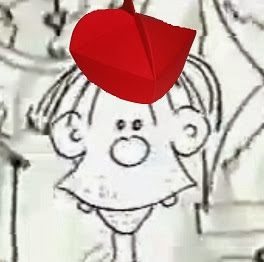
The comic strip Li'l Ish-bosheth never really took off.

At this stage, David is very much the good guy, and is really furious at the murders of Abner and Ish-whatsit. "David reigned over all Israel, doing what was just and right for all his people," as it says in Chapter 8, and God backs him. Indeed, God enters into an eternal covenant with him. I'm rather losing count of these Old Testament covenants, but each one was slightly more sophisticated that its predecessor. There'll be something much better on offer in the New Testament.

By the time we get to Chapter 9, David asks "Is there anyone still left of the house of Saul to whom I can show kindness for Jonathan’s sake?" There is, in fact; namely J's son Mephibosheth. But things are about to go horribly wrong, and it's all David's fault...

Bathsheba

Bathsheba, she bare in a bath.

Yes, the lovely Bathsheba comes on the scene and David falls for her. Problem: she is married to Uriah the Hittite. David's conduct is rather poor here: he has an affair with her, and he arranges for Uriah to be killed in battle. From now on, David's life is going to consist of a succession of troubles, and it is hard to present it in a cheerful light.

Tamar, David's daughter, is raped by Amnon, his son. Then Absolom, another son, rebels against David. Although Absolom gets killed, he does at least try to die in a comic fashion: he's riding a mule under a tree, and is caught by the branches and left hanging in mid-air.

Absolom

A brave attempt to inject some comedy into a depressing book.

It's no wonder that Samuel decided to stay dead during this book. Let's skip through to Chapter 22, without listing the wars and famine en route; here we have one of David's hit songs (he composed it earlier, it seems). This time he manages to be a bit more upbeat.

bishops singing

Are you all ready to join in the song, lads?

The Lord is my rock, and my fortress, and my deliverer;
the God of my rock, in Him will I trust. 
He is my shield, and the horn of my salvation, 
my high tower, and my refuge, my saviour...
This is good stuff, much better than "Follow me, follow me..." David later bundles a whole lot of these into a book of Psalms (this one turns up again as number 18).

Well, we're coming to the end of David's reign, although he hangs on a little longer in order to qualify for the book of 1 Kings. A deeply flawed character, but aren't we all, Richard? Yes, even you... look, admit that at least, and we may start getting somewhere...

Sunday, 28 April 2013

Exodus

So we reach Chapter 2 in the Eccles Bible project, explaining the Bible in simple terms to an atheist called Richard who hasn't yet got the hang of it. We started with Genesis, remember.

Egyptian scene

Our story resumes in Egypt.

In fact I have already been condemned for heresy for not explaining carefully enough about scriptures being divinely inspired, etc., but let's continue to dumb down slightly and get to the story, which is a cracking good read.

Now, we're going to see a lot of miracles in this chapter: burning bushes, plagues, and the parting of the Red Sea, for starters. You atheists are naturally a little unhappy with this: we don't know what the laws of physics actually are, but whatever they are, we mustn't break them. It's a bit like most modern legislation in fact - is it legal to upset a police dog by saying "Miaouw" to it? But I digress...

upset dog

An upset police dog.

Still, if God exists then He can certainly break the laws of physics. But if He doesn't, then He can't. We'll see more of this later.

Now if you've been paying attention, you'll realise that the Israelites are very important in the Bible, and the first part of Exodus is all about how Moses helps them escape from the dangers of life in Egypt, and head off towards the promised land.

Egyptian dangers

Moses (R) observes the dangers of life in Egypt.

Their way out of Egypt is blocked by water; Moses parts the Red Sea and the Israelites escape. Now, Richard, before you say "Pshaw! An invisible god that we don't understand causing the sea to move. How can that be?" (you were going to say that, weren't you?) let me point out that the tides you take for granted already cause the sea to move by an invisible force - gravity - that we don't understand, even if we have some equations to describe its action.

Well, this is Whitby

If I told you that the moon was somehow involved, would you believe me?

Now, Moses is going to have some interesting times in the desert. There's this business of the Ten Commandments, for starters (these will also turn up in Deuteronomy, with a slightly different wording). I'm sure you'd agree with some of them - if you get a reputation for killing, telling lies and stealing they're not going to invite you to prestigious international conferences, are they, Richard? Although if your killing is restricted to young babies, then President Obama will bless you, if that's what you'd like.

Richard worships a rabbit

Bowing down to worship idols (even rabbits) is also a no-no.

Anyway, God sets up a covenant with Moses and the Israelites. Arguably, this is the third covenant we've seen so far, as there were previous (less detailed) deals cut with Noah and Abraham. However, this is the most significant, and says that if the Israelites behave themselves, then they will be God's special people. Until Jesus comes along to upset the apple-cart, this is what people will be mostly working with.

The rest of Exodus is mainly concerned with constructing a tabernacle, regarded as a place where God can dwell. You're going to have trouble with this, Richard, as obviously if God exists then He is close to us everywhere, but it's useful to have a particular holy place to focus on.

Plan of the tabernacle

Moses, you will also need a hammer, a Phillips screwdriver, and a lot of faith.

So we're rapidly approaching the end of Book 2 of the Bible, and I think I've picked out some of the more important bits for you. What comes next is Leviticus, in which there's a lot less action, and a lot more in the way of rules and regulations, but let's finish with another action photo from the earlier part of Exodus.

plague of frogs

An Egyptian conference on Anura zoology.