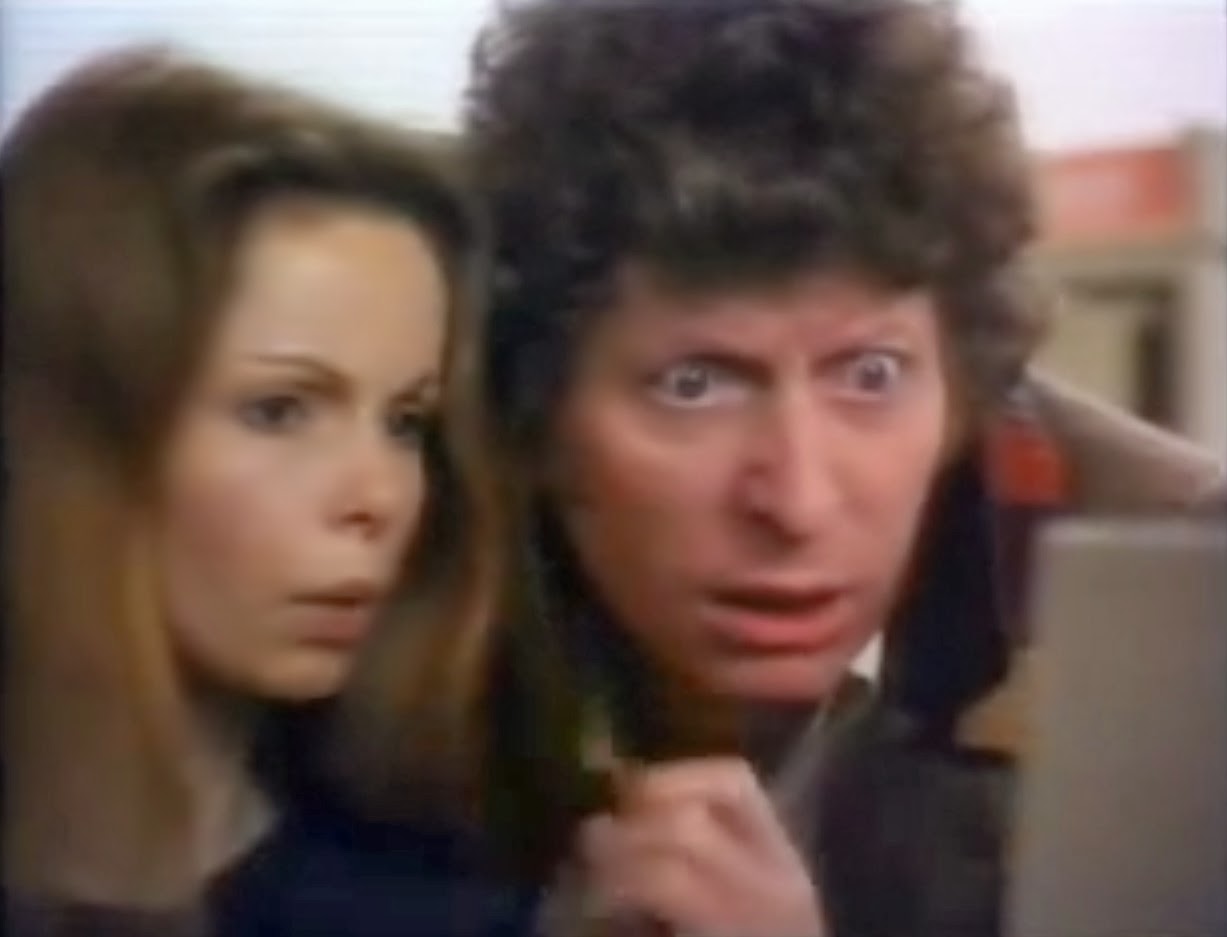
Alec Guinness Augustus Pugin Avery Dulles Buffalo Bill Cody Claud McKay Dorothy Day Edith Nesbit Edith Stein Evelyn Waugh Frederick William Faber G.K. Chesterton Gary Cooper Gerard Manley Hopkins Graham Greene John Henry Newman John Wayne Malcolm Muggeridge Mortimer Adler Muriel Spark Oscar Wilde Robert Hugh Benson Ronald Knox Siegfried Sassoon Thomas MertonBuffalo Bill Cody Nominations may be made by replying to this post, or to its advert on Twitter.
This is the spiritual journey of me, Eccles, my big brother Bosco, and my Grate-Anti Moly. Eccles is saved, but we've got real problems with Bosco and Anti.
This is me, Eccles
This is me, Eccles
Saturday, 21 February 2026
The World Cup of Catholic Converts
Tuesday, 31 March 2020
Lockdown Diary, Day 7313
Well, here we are after 20 years of lockdown caused by the Coronavirus, which keeps mutating every so often into something even nastier. The present incarnation is called COVID-39.
The latest form of the Coronavirus.
We are still allowed out to go shopping, and for exercise, but the churches have now been closed for 20 years. It is hard to remember what it was like in the old days, when we went along to St Daryl the Apostate and received Communion on the tongue (to the great annoyance of one or two pearl-clutchers who didn't actually believe in the Real Presence), or, if we wanted, did the Sign of Peace and sang hymns such as Cumberland ("Someone's eating sausages, Lord, Cum-ber-land..."). I may have got the words wrong after all this time.
Nowadays the churches remain closed, and all Masses are live-streamed. Pope Francis II (alias "Chito" Tagle) takes a very relaxed view of these, and priests no longer have to wear vestments. Many of them stay at home and stream the Masses from their bedrooms, without even bothering to choose the liturgically-correct colour for their pyjamas.
Father Brown dresses down for his livestream Mass.
Of course "Chito" takes seriously some aspects of worship, especially liturgical dancing (getting down wiv da yoof, as the 82-year-old teenager puts it) and the faithful are encouraged to skip around their houses during Mass. "Chito" claims to have arthritis and sciatica, so that kneeling is out of the question, but he can still dance the Funky Cardinal.
Late news: a new strain, the Coren virus, is infecting our brothers in the Anglican Church (having flipped between the Anglican Church, the Catholic Church, the Seventh-Day-Adventists, the Baptists, and the Pachamama Church several times during the last 20 years). It is particularly unpleasant.
The Coren virus.
Even later news: Eccles is still waiting for an answer to his "Dubia" - why was he excommunicated from Twitter?
Friday, 2 August 2019
No halo for G.K. Chesterton
Father Brown always used to say that the strangest case he ever came across was that involving the unaccountable behaviour of a Catholic bishop called Doyle. He encountered that eccentric cleric on a visit to Northampton, an obscure midland town which had mysteriously been designated the seat of a Catholic bishop. Equally mysteriously, Pope Benedict had chosen one Peter Doyle as its bishop, having watched a documentary called "Father Ted", and somehow having been led to believe that young Peter was the son of the devout Mrs Doyle.
Bishop Doyle's mother.
Thus, Father Brown was strolling through the streets of Northampton when his attention was attracted by cries of "We want Gilbert!" and "Down with Doyle!" A large crowd had gathered outside the bishop's house, and Father Brown entered, to observe an elderly cleric jumping up and down on the photograph of a large jovial man and screaming "WE HATES CHESTERTON! WE HATES HIM! WE HATES HIM!"
"I think, sir," said Father Brown, "that I would like to hear why you hate Mr Chesterton. Many people have spoken out in favour of his canonization, which is considered less controversial than those of Oscar Romero and Pope Whose-turn-is-it-this-week of Vatican II."
Bishop Doyle is happier speaking with James Martin at conferences on LGBT issues.
"First, there is no local cult," said the bishop, gulping down a handful of REES-MOGADON tablets ("guaranteed to bring total calm").
"Not even in Beaconsfield, where one can find the grave of Chesterton, which attracts pilgrims on a regular basis?" asked Father Brown. "Just seventy miles from here."
Evidently Bishop Doyle had not heard of Beaconsfield, for he continued his enumeration of the apparent defects in the character of Mr Chesterton.
Definitely not a pilgrimage. Just a chance meeting at GKC's grave.
"There is no pattern of personal spirituality," continued the bishop.
Father Brown choked slightly, thinking of "Orthodoxy", "The Everlasting Man", "Heretics", "Eugenics and other evils," "St Francis of Assisi", "St Thomas Aquinas", and numerous other writings of spiritual nourishment, as well as G.K.C.'s more personal proselyting on behalf of the Church.
"You are going to play the anti-semitism card next, are you not?" he said. "The man who was condemning the Nazi persecution of Jews as early as 1934. The friend of Weizmann. The encourager of Zionism."
The bishop stared at Father Brown in dismay, as if he might be regretting the huge blunder that he had made.
"I am a priest, Bishop Doyle," said Brown, "and I am ready to hear your confession."
However, things did not conclude as Father Brown had been expecting. Getting to his feet again, Bishop Doyle resumed jumping up and down on the photograph of Chesterton, shouting, "WE HATES HIM! WE HATES HIM! WE WAS RIGHT! WE WAS RIGHT! NASTY NASTY CHESTERTON! WE DOESN'T WANT HIM TO BE A SAINT! WE DOESN'T! WE DOESN'T!"
The actual photo upon which the famous jump of Bishop Doyle took place.
As Father Brown freely admitted later, this was not one of his most successful cases.
Monday, 20 November 2017
Fr James Martin Brown investigates
Through the quiet streets of Manhattan there walked a short, dull Catholic priest. Nothing about him suggested anything out of the ordinary, unless it was the rainbow-patterned socks that he wore. With him was a chunky, flamboyant man, also dressed unconvincingly as a priest. This was "Flambeau" Rosica, the communications expert whose Lightly Salted media empire had brought him worldwide fame.
The Innocence of Father Brown.
The two priests were discussing deep theological questions, and had come to an agreement that if, as the great theologian Spadaro had proved, it was possible to argue that 2+2=5, then many of the conclusions drawn in the Bible must have been wrong.
"It is an impenetrable mystery to me," admitted Flambeau. "How could the Catholic Church have been wrong for 2000 years? It was not until the era of Pope Francis the Great that we realised that the old Doctors of the Church were completely ignorant."
New York's got Talent!
Father Brown thought for a while, and, as they walked the dusty streets, he saw a sign, IGNATIAN GAY BAR. "Let us stop off there for a while," he suggested, "and perhaps build a few bridges."
They plunged into the red-curtained tavern, which was not only cosy, but even luxurious inside. Once seated, Father Brown explained some of the other parables that had been misinterpreted for so long.
"The sower and the seed," he began. "It was always thought that the seed that fell onto fertile soil and grew was somehow the most worthy. But did not the seed that fed the gentle birds have a more sacred destiny? The farmer was clearly a capitalist, trying to exploit the workers, and he probably supported Donald Trump."
A mystery for Flambeau: how did this man ever become a cardinal?
"Then again, Jesus totally misunderstood the parable of the Good Samaritan. It was the Jesuit who walked past the injured man - stopping only to sell him a copy of his new book - who was the real hero of the story."
"Too true," commented Flambeau, sticking his leg out to trip up a passing waiter and roaring with laughter. "Then there was the Prodigal Son. What a wretch he was, deserting those happy pigs, who wanted him to feed them, and rushing back to stuff himself on fatted calf!"
"Talking of which, why don't you have another plate of fatted calf yourself?" urged Father Brown. "Your chair doesn't seem to be collapsing yet."
"When you practise Ignatian Discernment," he added, "you see all the parables in a new light. Take the rich man and Lazarus, for example. Obviously the villain here is Abraham, who refused to accept the rich man into his bosom. I would never refuse to accept a rich man into my bosom."
They left the tavern, and Flambeau drew Father Brown's attention to a photograph. "Can you explain this?" he asked.
No headscarf?
"It seems that this is Karen Oliveto, a Methodist Minister who accused Jesus of being a 'bigot'" noted Father Brown. "She is apparently a lesbian, so we should make her welcome. However, the Islamic connection is not entirely clear to me..."
Wednesday, 31 December 2014
The Top 100 Christians, part 2
A truly holy man, and an obvious omission from the list.
Some of the winners have achieved great fame through publicity on this blog: for example, Vicky Beeching, who came out as a rock singer; Tim Stanley, alias Dr Who; Fr Ray Blake, the victim of the Brighton Argus; and Libby Lane, the first Anglican bishopess. Not to mention Austen Ivereigh and Catherine Pepinster. That's enough plugging old posts, Eccles.
Tina Beattie - omitted, in spite of all my efforts.
So who else should have been on the list, and wasn't? I was going to suggest Santa Claus, as he manages to be present in numerous places at the same time, proclaiming the joy of Christmas. However, he turns out to be Turkish, although his holding company is based at the North Pole.
Then there's Christopher Robin (Milne), as in "Christopher Robin is saying his prayers", but he turns out to be dead. The priest-detective Fr Brown of Kembleford, if alive, must be about 130 years old by now: it is rumoured that he lives in retirement in Scotland, calling himself "Basil Loftus" and emerging occasionally to write a humorous column for the Catholic Times. However, this rumour is unconfirmed, so I searched for others who embody the true Christian spirit.
Thomas the Tank Engine, in papal camauro.
Thomas, although a train rather than a human being, comes from a Christian family (the Rev. Wilbert Vere Awdry was his godfather). He is often described as a "really useful engine", but this does not go far enough. In terms of his faithfulness to Christ and his kindness to the poor, he surely provides one of the great spiritual examples of our time. It is true that he has a high carbon wheelprint, and would thus not be in favour with Pope Francis, but I think he can easily overcome such opposition. Success always attracts jealousy.
Fr Jack Hackett.
Although technically Irish, Fr Jack was featured in the Father Ted series of documentaries, which had two British producers, Geoffrey Perkins and Lissa Evans. This makes him eligible for an award, which he wins on account of his great holiness and kindness. Hostile critics have described him as "lecherous", "foul-mouthed" and "alcoholic"; it is true that when he awakes from a deep coma and shouts "EXISTENTIAL SCHIZOPHRENIC" or "NEO-PELAGIAN" at random passers-by, one wonders how he achieved his high position as spiritual leader. However, he is a truly humble man, whose needs are simple (mainly, DRINK), and we plainly see the Light of Christ shining through him.
Wednesday, 29 January 2014
How to address the clergy
A deacon or "Reverend Mister". Often he has a second job, e.g., burglar.
Deacons are customarily accorded the "Reverend" title, which means that they should be revered, or held in reverence. When two deacons meet, they say things like "Oh how I revere you!" or "No, I revere you more than you revere me!" Of course being a deacon doesn't make you immune to hypocrisy (you have to be a bishop to achieve that level of purity): I once knew one who had enough planks in his eyes to make an entire shed.
Murder at the vicarage! All in a day's work for a priest!
So we come onto the priesthood, where again "reverence" is the appropriate reaction. Priests come across many sins in their daily round, of which murder is perhaps the most common. The priest above was an Anglican, but the same applies to Catholic priests, of course. Some (particularly the Catholic priests) are addressed as "Father". Not "Dad", not "Pop", just "Father".
Fr Brown. (The raised umbrella on a dry day is a liturgical error.)
After that it gets complicated. There are lots of clergy with titles such as Canon Street, Metropolitan Line, Marble Archdeacon, etc. but I think we'll move straight on to Monsignor.
Mgr Ronald Knox. What is it about the clergy and crime?
These chaps used to be regarded as Very Reverend, or in some circumstances Right Reverend, but have now been downgraded to "Reverend". Since future Monsignors will have to be at least 105 years of age, it won't matter how you address them as they won't be able to hear you anyway.
Bishops, then...
You address a bishop as "My Lord", although they are also "Right Reverend". This shows that they are the bosses, are always right, and should obeyed under all circumstances. In return for your squirming in their presence, they undertake always to be loyal to the Pope, the Queen, the Magnificent Archdruid of the Luminous Feet, or whatever the big cheese in their church is called.
Four young members of the dissident group ACTA, turned away by a faithful bishop.
Archbishops are a bit more senior. I was told "Say 'Your Grace', Eccles, when you meet Archbishop Nichols," but the poor man looked disconcerted when I began "For what we are about to receive..." So this one is a mystery to me.
Cardinal Murphy-O'Connor ("His Eminence").
Cardinals are "His Eminence" or "Your Eminence". This is a bit of a come-down, really, as being "eminent" is less impressive than being "reverend", surely. It's not much better than just being a celebrity, like Eminem. Still, these are the princes of the Church, so should be regarded as eminent in the same way, as, say, Prince Harry.
A Pope, with birds of pray.
Popes are very busy men, asked to give many off-the-cuff newspaper interviews in addition to their ecclesiastical responsibilities. If you meet a pope - perhaps performing papal duties at your local bird sanctuary - call him "Your Holiness". This is to emphasise that he's not merely eminent, like a cardinal, but is in many ways a saved person. If he then says "Bless you!" it would be discourteous to point out that you didn't sneeze.
Friday, 24 January 2014
President Hollande meets the Pope
Would you like to meet the First Lady of France? Or the Second? Or the Third?
Hollande: Forgive me, votre Popenesse, for I have sinned, and I'm going to carry on sinning.
Pope: So, I've heard. I wanted to talk to you about the issue of same-sex "marriage".
Hollande: I didn't know you cared, mon ami. It would be modern of me to appoint a First Gentleman or two, as a change from all those First Ladies, ...
Domestic problems at the Elysée Palace.
Pope: Oh, never mind. I was going to bring up the subject of abortion, too, but I know you wouldn't listen.
Hollande: Sacrée Vache! This is not open to negotiation. So what can we talk about?
Pope: Well, it would look odd if you went home again after just one minute's deep and far-ranging discussions.
Hollande: On the other hand, if we talk about anything serious, you're going to punch me sur le hooter, aren't you?
Pope: Well, can we find something uncontroversial to chat about while they take some photos?
Hollande: Eh bien! What do you think of the new version of The Three Musketeers on the goggle-boîte?
Pope: Well, I appreciated that portrayal of Cardinal Richelieu as a cunning and devious man, the real power behind the throne. I've got quite a few like that.
Cardinal Richelieu - his agents are everywhere.
Hollande: Ah, in France we keep the Church in its place. Did you get round to seeing Father Brown?
Pope: Yes. Too many anachronisms, I thought, but who am I to judge?
Hollande: It's true they didn't have light sabres in the 1920s.
Pope: Or clown masses. If they had, I'm sure Chesterton would have mentioned it.
Father Brown prepares to attend a meeting of ACTA.
Hollande: Well, that's enough chatter. What shall we say in our press release?
Pope: We had an amicable discussion of the urgent issues facing the world.
Hollande: Yes, I'll go along with that. Oh, and I've brought you une bouteille de vin...
A little gift for Pope Francis and Pope Benedict.
Wednesday, 27 November 2013
Evangelii Gaudium
Our trained staff undertake a detailed computer analysis.
As a control experiment, let's start with St Matthew's Gospel, which most readers probably know something about. Some of the key phrases that occur are: "I say unto you", "The Kingdom of Heaven" and "The Son of Man" (all more than 30 times), with "the chief priests" coming up behind on about 20. I think we can conclude that the book is about Someone who is keen to put forward a religious message, possibly One with an interest in Heaven. Perhaps at some stage He tangled with some priests. I hope that helps.
Should I have said more about custard?
Turning our computer's attention to Evangelii Gaudium, we see that one phrase that comes up over 20 times is "post synodal apostolic exhortation", but that's mostly in the bibliography, so doesn't really count. "The Church" and "the Gospel" score highly, over 100 times each, so the author clearly thinks these are important (this is a good sign). There is also a fair amount about the Holy Spirit, and over a dozen mentions of "Latin American". Watson, we have here an educated person, possibly of Argentine extraction, who is trying to give some religious guidance.
Father Brown meets the Rev Chesterton.
Let's try one further experiment, with The Innocence of Father Brown by G.K. Chesterton, which is a little longer than Evangelii Gaudium. Although at first sight this appears to be the biography of a Catholic priest, perhaps something like the Confessions of St Augustine, the computer never lies, and it reveals that some of the most popular phrases occurring are "said Father Brown", "said the doctor" and "the front door". These do not indicate that we have a religious text before us, more a collection of anecdotes. Also, the last phrase is a bit of a mystery to us - perhaps it is something to do with the gates of Heaven?
Thus, on a scale of spiritual nourishment, I think it fair to say that Evangelii Gaudium (EG) scores a little lower than St Matthew's Gospel (MG), but a little higher than The Innocence of Father Brown (FB). Let us look for points in common, and points of difference.
Points in common.
All three works show a high respect for the office of priest, and both (MG) and (FB) contain examples of priests who are, well, unsaved. All three discuss salvation in a religious context. None of them seems to accept the possibility of ordaining women to the priesthood, and all three seem to show a rather traditional attitude to sin.
Points of difference
Although all three have a main protagonist who is some sort of religious figure, the hero of (EG) isn't primarily engaged in performing miracles, nor at solving mysteries (although he does refer to a "sense of mystery"). Again, in (MG) we encounter a wide range of characters, from the impressive Peter through to the villainous Judas; likewise, in (FB) we meet a range of heroes and villains, some of whom steal fish knives, and some of whom drop hammers off church towers. There is less action in (EG), although the author does speak of crime in cities, and of fish swimming in polluted rivers: by and large, he disapproves.
Thanks, Eccles!